 Visit our USA website



Early diagnosis has long been one of the greatest challenges in Alzheimer’s disease. For decades, clinicians have been forced to rely on expensive brain scans, invasive lumbar punctures or the appearance of clinical symptoms, often when the disease is already well established. Today, that paradigm is shifting. At Re:Cognition Health, we are proud to be delivering the Bio-Hermes-002 trial, an international landmark study exploring whether a simple finger-prick blood test could help diagnose Alzheimer’s disease earlier, more accurately and with greater accessibility than ever before.
This research represents more than a scientific milestone. It is a potential turning point for patients, families and clinicians worldwide.
What Is the Bio-Hermes-002 Trial?
Bio-Hermes-002 is one of the largest and most diverse international biomarker studies ever undertaken in Alzheimer’s disease. Led by the Global Alzheimer’s Platform Foundation (GAP), with funding from LifeArc and support from the UK Dementia Research Institute, the study aims to validate blood-based biomarkers against current gold-standard diagnostic tools.
The trial will enrol around 1,000 participants across the UK, United States and Canada, including individuals who are cognitively normal, those with mild cognitive impairment, and those with mild to moderate Alzheimer’s disease.
Using a finger-prick style blood sample, researchers will analyse three key proteins associated with Alzheimer’s pathology:
- pTau217 – linked to tau tangles in the brain
- GFAP – a marker of astrocyte activation and neuroinflammation
- NfL – an indicator of neuronal damage
These results will be compared with Amyloid PET scans, MRI imaging and other emerging digital biomarkers, such as speech and cognitive assessments. If validated, this approach could make an accurate diagnosis of Alzheimer disease simpler, faster, more scalable and far less invasive.
Why Biomarkers Are Transformational
Biomarkers are not simply diagnostic tools; they are the gateway to treatment.
“The only responsible way we can offer the new sophisticated Amyloid Targeted Treatments (ATT) for Alzheimer’s, (Kisunla and Leqembi treatment) is with the use of an accurate biomarker to confirm abnormally elevated amyloid pathology in the brain, the accepted hallmark for the disease, ” explains Dr Emer MacSweeney, Consultant Neuroradiologist and CEO of Re:Cognition Health.
“Biomarkers allow identification the biological processes of Alzheimer’s disease, with precision, often before symptoms become disabling, a change changer for patients, especially as the new ATT treatments are most effective when cognitive symptoms are mild and indeed licenced, only, for those with mild cognitive symptoms.”
Until very recently, access to emerging amyloid-targeting therapies has been limited, globally, by the complexity, availability and expense of PET amyloid and cerebrospinal fluid analysis to provide biomarker confirmation of Alzheimer’s. Blood-based biomarkers, which are now emerging on the market and indeed approved in many countries, including the USA for diagnosis of AD, are removing those barriers, enabling clinicians to identify suitable patients earlier and more efficiently.
At Re:Cognition Health, our experts have spent more than 12 years delivering advanced, biomarker-led clinical trials for next-generation Alzheimer’s treatments. During this time, we have treated, and continue to treat, thousands of patients across the UK, Europe and the US, both through approved therapies now on the market and through cutting-edge clinical trials.
——————————
CASE STUDY
Michael’s Story: When Research Becomes Personal
 For Dr Michael Sandberg, the importance of biomarker research is deeply personal.
Dr Michael Sandberg is the Medical Director of 90 Sloane Street, a private general practice in London with a 100-year history. While rooted in tradition, the practice is at the forefront of modern medicine, with its own on-site laboratory enabling rapid, high-precision diagnostics.
Using advanced PCR testing, infections such as chest infections or gastrointestinal illness can be accurately identified within an hour, while most blood test results are available within 15 minutes. This ability to diagnose illness early and precisely has been transformative for patient care.
As a result, 90 Sloane Street is able to treat many patients with intravenous antibiotics on-site, often preventing the need for hospital admission. Early diagnosis, rapid intervention and personalised care remain central to the practice’s approach to modern general medicine.
Five years ago, Dr Sandberg established the London Genetic Centre (TLGC) at 90 Sloane Street, bringing together five consultant geneticists to pioneer asymptomatic whole genome screening in a general practice setting. The programme was designed to identify individuals at increased risk of serious disease before symptoms develop, with the aim of reducing cancer mortality by between a fifth and a seventh, as well as lowering the risk of other preventable conditions.
The UK’s first whole genome screening study conducted in general practice was presented at ASCO in 2022 and published in 2025. TLGC assesses both single-gene risks and polygenic risk scores, a combined approach that enables earlier intervention and meaningful risk reduction. Importantly, testing is limited to genes where actionable steps can be taken to improve outcomes.
With on-site echocardiography and ultrasound, 90 Sloane Street remains a rigorously science-based practice focused on prevention, precision and early intervention.
Michael is more aware than most, of the gains blood screening tests to measure or detect disease. But for him there has also been a much more personal journey. His mother, Aline, was diagnosed in 2014 with Alzheimer’s disease aged 84 and he saw the impact it could have.
“What a role our mothers play in our lives.” My mother was a generous person, she felt she was lucky and so had a need to help other people. Then when she started to notice her memory dropping off, she was tested and diagnosed with Alzheimer’s.
Michael’s mind went to the decline she would experience, the need for intense support and the inevitable loss of the things she loved, “From her point-of-view she was quite clear that if she couldn’t play the game she loved like Bridge and if she couldn’t drive a car, she didn’t feel life was worth living.”
It was at this point he heard of a trial for a treatment that his mother could join with Dr Emer McSweeney at the Re:Cognition clinic in London, and a site that is part of the Bio-Hermes-002 trial. The trial gave her more time as herself. It was also through this clinic that Michael heard about the Bio-Hermes-002 trial.
“I very much believe in knowing what you have, so long as you can do something about it, as the future. When I saw the Bio-Hermes-002 trial it really excited me. The ability to screen through a finger prick test to see if a person is on the way to developing dementia, without hugely expensive scans and lumbar punctures is going to be fundamental if we are to fulfil the potential of new treatments the diagnostics pathway has to be simplified and this was the perfect way, simple, easy to do and financially viable for large population screening.
I was relieved to find out that my test result was negative and it is a sincere benefit knowing my mother’s diagnosis.”
Michael foresees the enormous potential for these tests to spearhead the diagnostic process of dementia.
——————————
Earlier, More Accessible Diagnosis
One of the most important aspects of Bio-Hermes-002 is its commitment to diversity. At least 25% of participants will be recruited from underrepresented communities, addressing a long-standing gap in Alzheimer’s research.
“This is critical,” says Dr MacSweeney. “If personalised medicine is to be effective, our data must reflect real populations. Blood-based biomarkers give us a chance to close that gap and offer earlier diagnosis to everyone, not just those with access to specialist centres.”
In the future, these tests will be used before symptoms arise, identifying people at risk and opening the door to preventative strategies. This will become a very important tool in primary care as well as secondary care, across the world.
Looking Ahead
While further evidence is needed before blood-based tests can be adopted widely within the NHS, studies like Bio-Hermes-002 are laying the foundation for that future.
“At Re:Cognition Health, we are delighted to be delivering this study,” says Dr MacSweeney. “Biomarkers are revolutionising how we diagnose and treat Alzheimer’s disease. This research brings us closer to a world where earlier intervention is not the exception, but the norm.”
Through rigorous science, compassionate care and international collaboration, Re:Cognition Health continues to help reshape the future of Alzheimer’s diagnosis, offering hope where it is needed most.
Turning Scientific Breakthroughs into Real-World Treatment
The arrival of anti-amyloid therapies such as Kisunla (donanemab) and Leqembi (lecanemab) marks a defining moment in Alzheimer’s care. For the first time, treatments are available that do not simply manage symptoms, but actively target the underlying disease process by reducing amyloid beta plaques in the brain.
Both Kisunla and Leqembi were developed and validated through extensive international clinical trials, many of which were delivered through Re:Cognition Health centres in the UK and United States. As a recognised global leader in biomarker-led Alzheimer’s research, Re:Cognition Health played a direct role in generating the evidence that has made these therapies a reality.
“These drugs represent a genuine shift towards disease modification,” explains Dr Emer MacSweeney. “But they only work when prescribed for the right patients, at the right stage of disease – and that requires accurate biomarkers.”
Kisunla and Leqembi are designed for people in the early stages of Alzheimer’s disease, when symptoms are mild and brain damage is still limited, and it is not possible to reliably make an accurate diagnosis, without a biomarker. Biomarker testing, to demonstrate the presence of amyloid pathology, is essential before treatment can begin, as well as for ongoing monitoring and safety.
At Re:Cognition Health, eligible patients can now access these therapies privately, enabling earlier intervention aimed at slowing disease progression.
The development of Kisunla and Leqembi signals a broader transformation in Alzheimer’s treatment – one where early diagnosis, biological confirmation and targeted treatment are inseparable. Having treated hundreds of patients in the clinical trials and given over 11,000 doses of this class of medication, that ultimately brought these drugs to market, Re:Cognition Health continues to translate cutting-edge research into meaningful clinical impact for patients and families, today.
For further information about clinical trials for Alzheimer’s disease, visit: https://recognitionhealth.com/clinical-trials/
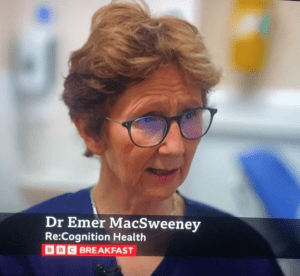
Read the news story here:
https://www.bbc.co.uk/iplayer/episode/l0057vrg/alzheimers-fingerprick-test-could-help-diagnosis
Watch the full news report: https://www.bbc.co.uk/iplayer/episode/l0057vrg/alzheimers-fingerprick-test-could-help-diagnosis