 Visit our USA website


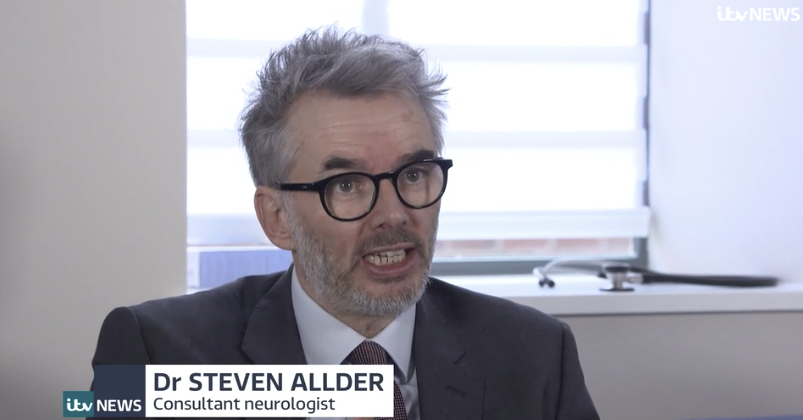
The recent ITV News report on the death of army veteran Wayne Mallon is a stark and deeply troubling reminder of the hidden neurological injuries faced by many former service personnel.
Wayne served for 24 years in the Royal Artillery, completing multiple tours in Kosovo, Iraq and Afghanistan. He was fit and healthy on discharge. What followed, however, was a gradual and devastating decline marked by worsening headaches, personality change and increasing reliance on medication to cope with unrelenting pain.
At Re:Cognition Health, Consultant Neurologist Dr Steve Allder works closely with veterans and families affected by blast-related traumatic brain injury (TBI). Wayne’s story reflects patterns seen all too often in clinical practice and highlights why greater awareness, earlier investigation and more joined-up care are urgently needed.
Blast-related TBI is not the same as civilian head injury
Traumatic brain injury caused by blast exposure behaves differently from the types of head injury most clinicians encounter in civilian settings. While civilian TBIs often follow a single impact, blast-related brain injury can result from repeated exposure to explosive forces over many years. These forces affect the brain in complex ways, disrupting neural networks, blood vessels and inflammatory pathways.
One of the most important red flags in blast-related TBI is progressive headache. Dr Allder explains that research consistently shows worsening headache over several years as a characteristic feature in veterans with blast exposure. Unlike post-concussion headache following civilian injury, which typically improves with time, blast-related headache may intensify, last longer and become increasingly resistant to standard pain relief.
In Wayne’s case, his headaches began as mild but steadily worsened in frequency, intensity and duration. Over-the-counter medication initially helped, but gradually became ineffective, leading him to take more and more in an attempt to control the pain. This trajectory should raise concern for an underlying neurological process rather than being dismissed as stress-related or functional.
When symptoms are misattributed, opportunities are lost
Personality change, emotional dysregulation and cognitive difficulties often coexist with headache in blast-related TBI. Families frequently describe a loved one who becomes more irritable, impulsive or withdrawn, no longer recognisable as the person they once knew. These changes can be profoundly distressing and destabilising for relationships.
Too often, these symptoms are attributed solely to post-traumatic stress disorder. PTSD is a serious psychiatric condition and undoubtedly affects many veterans and should never be underestimated. However, it is very important to note that it is not a complete explanation for every symptom experienced after military service. When neurological injury is overlooked, the result can be delayed diagnosis, fragmented care and inappropriate treatment strategies.
Misattribution matters immensely. It can restrict access to specialist investigation, prevent targeted management and leave families without clarity or validation of the symptoms. In Wayne’s case, his wife Jo, a former psychiatric nurse, recognised features that could fit PTSD, but also suspected something more. The overlap between psychiatric and neurological symptoms makes careful assessment essential, particularly in those with significant blast exposure.
The importance of specialist neurological assessment
At Re:Cognition Health, assessment of suspected blast-related Traumatic Brain Injury goes beyond standard imaging and symptom checklists. Specialist neurological evaluation may include:
- Advanced imaging techniques
- Biomarker-led investigations
- Detailed cognitive assessment
Together, these approaches enable clinicians to build a far clearer picture of brain health.
These tools can help distinguish between primary psychiatric conditions, neurodegenerative processes and acquired brain injury. While not every case will yield definitive answers, thorough investigation can guide more appropriate treatment, reduce reliance on escalating medication and support more realistic expectations for patients and families.
Importantly, diagnosis is not just about labelling. It is about access to support, rehabilitation strategies, symptom management and coordinated care that addresses both neurological and psychological needs. Veterans require pathways that recognise the complexity of blast injury and do not force an artificial divide between mind and brain.
Supporting families as well as patients
Blast-related brain injury rarely affects the individual alone. Families often describe feeling isolated and unsupported after discharge from service, with a sudden loss of the structure and safety net that military life provides. As Jo Mallon powerfully stated, “When he left the army, we left the army.”
Families may struggle to understand personality changes, mood swings or cognitive decline, often questioning whether they are doing something wrong or failing to cope. Clear explanation, validation and inclusion in the care process are essential components of compassionate neurological practice.
Wayne’s story also highlights the dangers of unmanaged pain and polypharmacy. Chronic headache, when inadequately treated or poorly understood, can drive people towards escalating doses of medication, increasing the risk of harm. Early recognition and specialist input may reduce this risk and offer safer alternatives.
A call for greater awareness and joined-up care
The ITV News reporting on Wayne Mallon’s death has shone a necessary light on an issue that remains under-recognised in the UK. While the United States has made significant advances in acknowledging and researching blast-related TBI, awareness and dedicated pathways remain limited closer to home.
Greater education is needed across primary care, mental health services and veteran support organisations to ensure that progressive headache, personality change and cognitive decline in former service personnel are recognised as potential neurological warning signs. Screening should not end at discharge, and follow-up must extend years, not months, after active service.
At Re:Cognition Health, we commend ITV News for amplifying this story and giving voice to families who are calling for change. We continue to support research, clinical care and advocacy for those affected by acquired brain injury, including veterans exposed to blast trauma.
Wayne Mallon’s death is a tragedy. His story should serve as a catalyst for better recognition, earlier intervention and more integrated care. We owe it to those who serve to take blast-related brain injury seriously, to investigate it properly and to ensure that no family is left without answers when symptoms are there to be seen.
Watch the full report:
Fact Check: Blast-Related Traumatic Brain Injury (TBI)
Is blast-related TBI a recognised medical condition?
Yes. Blast-related traumatic brain injury is a well-recognised neurological condition, particularly among military personnel exposed to explosions during service. It has been extensively studied by defence, neurology and neuroscience bodies including the US Department of Defense, Veterans Affairs, NATO research groups and academic institutions worldwide.
How does blast-related TBI differ from civilian head injury?
Established evidence supports key differences.
Civilian TBI typically results from a single mechanical impact, such as a fall or road traffic accident. Blast-related TBI may result from:
- Primary blast wave effects on brain tissue
- Repeated low-level blast exposure over time
- Combined blast, acceleration and rotational forces
These mechanisms can cause diffuse brain injury, vascular disruption and chronic neuroinflammation, even in the absence of a single major head impact.
Are progressive headaches a recognised feature of blast-related TBI?
Yes.
Research shows that veterans with blast exposure may develop progressive, worsening headache over years, rather than improvement over time. This pattern is:
- Less typical in civilian mild TBI
- Recognised as a potential red flag in blast-exposed individuals
- Often resistant to standard analgesic treatment
Progressive headache has been reported in longitudinal veteran cohort studies and is increasingly recognised in specialist neurological practice.
Can blast-related TBI cause personality and behavioural changes?
Yes.
Blast-related brain injury has been associated with:
- Irritability and emotional dysregulation
- Personality change
- Cognitive impairment affecting attention, memory and executive function
These symptoms reflect disruption to frontal and limbic brain networks and may evolve gradually, making them difficult to recognise without specialist assessment.
Is blast-related TBI often misattributed to PTSD?
Yes, and this is a recognised clinical challenge.
PTSD and blast-related TBI frequently coexist and share overlapping symptoms. However:
- PTSD alone does not explain progressive neurological symptoms
- Neurological injury may be missed if symptoms are attributed solely to psychological causes
- Misattribution can delay diagnosis, fragment care and limit access to appropriate investigation
Current expert consensus supports integrated neurological and psychiatric assessment, rather than an either/or approach.
Are standard scans always sufficient to detect blast-related brain injury?
No.
Conventional CT and MRI scans may appear normal in many cases of blast-related TBI. Specialist assessment may therefore include:
- Advanced imaging techniques
- Blood-based biomarkers of brain injury and neurodegeneration
- Detailed neurocognitive testing
These tools help build a more comprehensive picture of brain health, although research in this area is ongoing.
Is biomarker research in blast-related TBI an active field?
Yes.
Blood-based biomarkers such as neurofilament light (NfL), GFAP and phosphorylated tau are being actively studied in both traumatic and neurodegenerative brain injury. While not yet diagnostic in isolation, they may:
- Support earlier detection
- Help stratify risk
- Inform prognosis and research trials
This is a rapidly evolving area of neuroscience.
Does blast-related TBI affect families as well as patients?
Yes.
Family impact is well documented. Behavioural change, emotional instability and cognitive decline can place significant strain on relationships and caregiving roles. Best-practice care models emphasise:
- Family education and involvement
- Clear explanation of symptoms
- Long-term support beyond military discharge
Is long-term follow-up after discharge important?
Yes.
Evidence supports the need for extended follow-up, as symptoms of blast-related TBI may:
- Emerge or worsen years after exposure
- Be overlooked during standard discharge assessments
- Require specialist input well beyond active service